Our Products
Model 507 Lathe Attachment
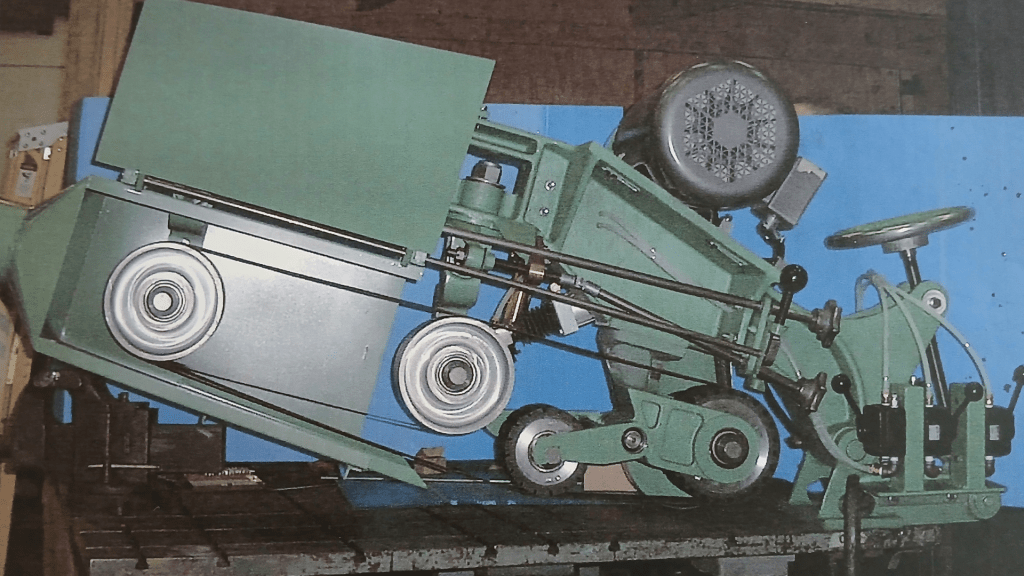
- Used to grind shafts, rolls, hydraulic pistons and rams, ect., the Model 507 Lathe Attachment is made from iron, steel, stainless steel, aluminum, brass, copper, and rubber. With four inch wide abrasive belts, this unit is mounted on an engine lathe compound or tool post, or on the back of a suitable lathe carriage.
- Generally, the Model 507 can be mounted to grind and polish all diameters the lathe swings. Different diameters are quickly accommodated by a hand wheel operated elevating screw and the lathe corssfeed. Powered elevation is optional.
- Suitable for Lathes 26” or larger, some smaller lathes of heavy construction are suitable.
- Grinding is performed by an abrasive belt backed by a rubber covered contact roll. Various rubber hardness and types of slots are optional.
- A mounting base is available with a fitting to which a flexible metal hose may be connected to run dust collector.
Model 712 Swing Grinder
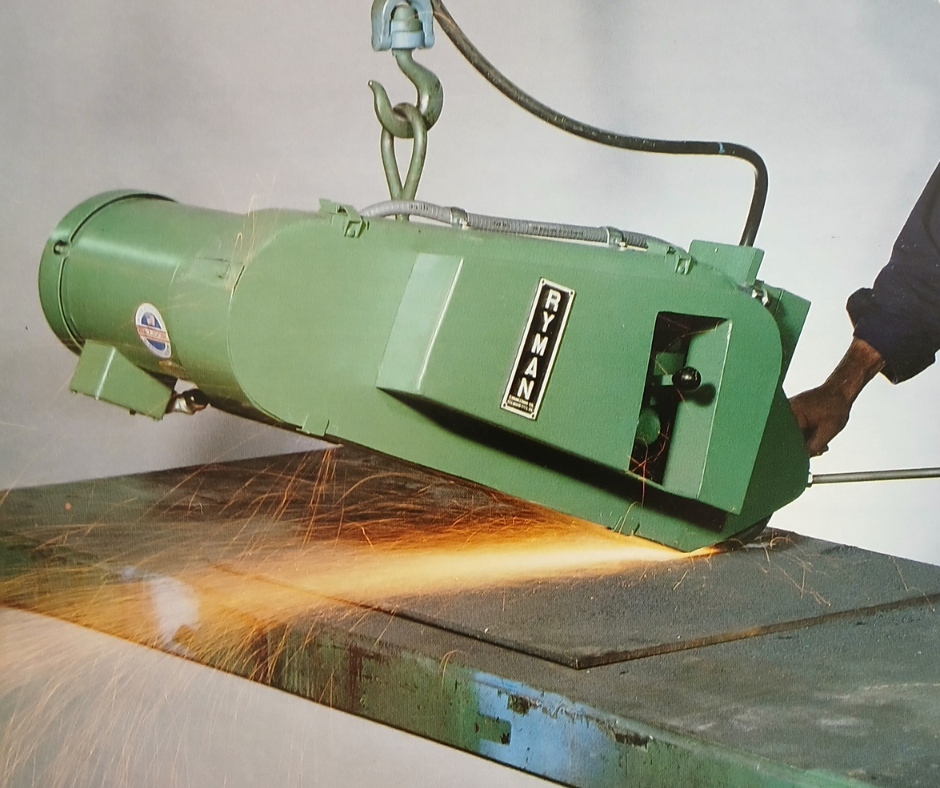
- Used for work roll grinding and slack-belt polishing, the Model 712 is an inexpensive abrasive belt swing grinder. It is powerful, lightweight, compact, and well balanced with a choice of 2, 3, or 5 Horsepower motors.
- The abrasive belt operates over a motor-mounted drive pulley, a rubber-covered war k roll, and separate tension pulley. Belts are quickly changed by moving the tension lever once to release tension and once to apply it. Roll are dynamically balanced; solid hubs prevent imbalance rom dust accumulation.
- The Model 712 may be suspended from a beam, from a jib, or fixed rail and trolley to cover a large area. The grinders can be pivoted and tilted to grind corners and vertical surfaces.
Model 135T Ryman Belt Bench Grinder
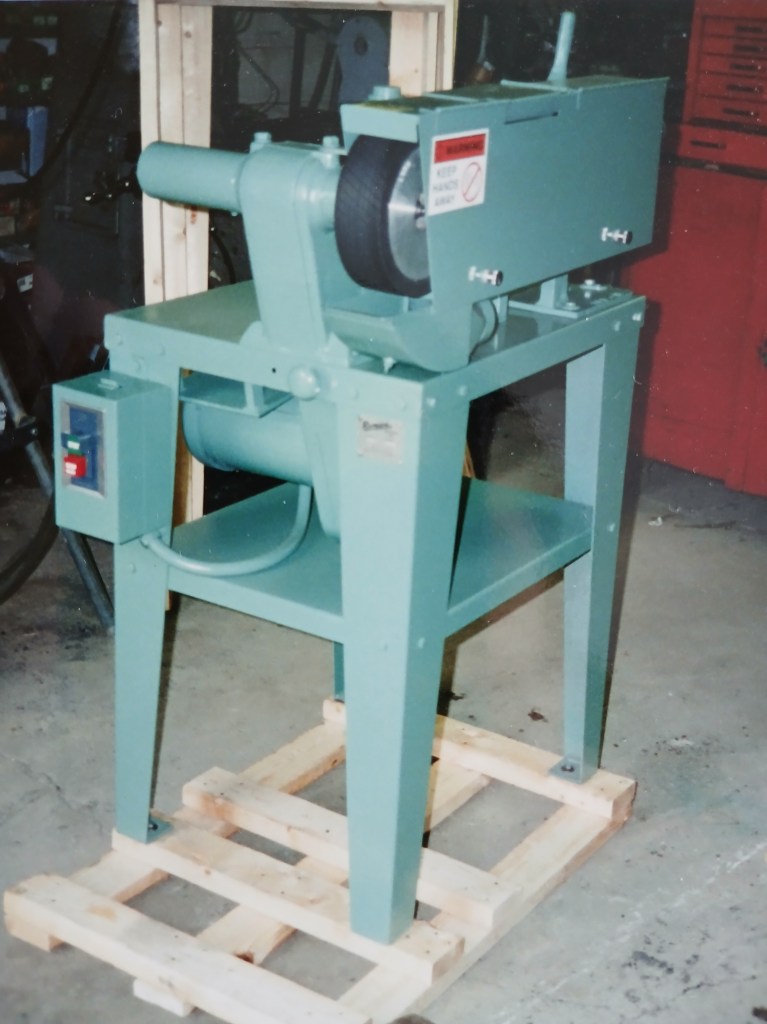
- The Ryman model 135T is a standard Lyman belt bench grinder attached to a steel table constructed with a 8/8 steel plate table top to I’ve maximum strength and minimum vibration required in a hight speed grinding.
Who We Are
Why Use Belt Grinders?
Since 1945, we have manufactured grinders, most of which use coated abrasive belts. Throughout the years, we have served basic metals producers, metal fabricators, hand tool forgers, nuclear and fossil boiler manufacturers, rubber roll producers and users, various graphic art industries, industrial machinery builders, and many more.
There are advantages in many operations in using abrasive belts instead of hard bonded wheels. One advantage is derived from the way belts are coated with abrasives: all abrasive grains are oriented with long axis perpendicular to the surface of the belt; in contrast all grains are oriented randomly in hard bond wheels. The belt has only one layer of grain; no energy must be used to rupture bond to use all the grains on the belts as is necessary with hard wheels. There are always many more abrasive grain cutting edges per unit of area of engagement with an abrasive belt than with hard bonded wheels. The abrasive belt cuts more freely and tends to remain cool.


